
0121 271 0221
Please note: the information in this article is for guidance only. For a definitive answer as to what has caused your woodburner to set off the carbon monoxide, please consult a competent heating engineer.
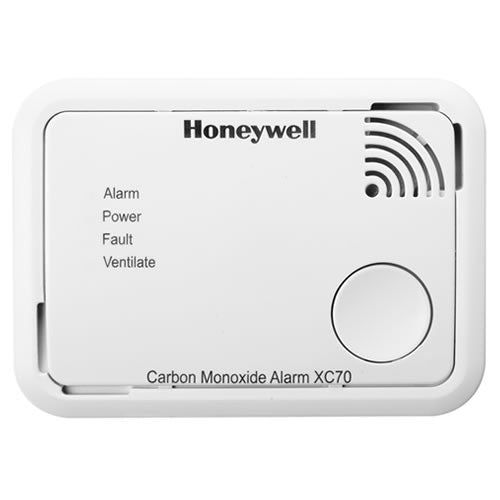
Your carbon monoxide alarm is there to alert you that a potentially deadly gas is leaking from your wood-burning stove or other appliances in your home. Indeed, if your stove has been installed since 2010, it is a legal requirement.
So, if your alarm suddenly goes off, it might cause you some panic. The first thing to do is ventilate the room to disperse the carbon monoxide. At this stage, you can start to investigate what might be causing a leak.
The first thing to check is for any obvious holes or cracks in the body of your woodburner or the flue. If there is damage to the body, it is likely that gases will be escaping. Depending on the severity of the fault, it might be possible to seal it with fire cement.
The next item to check is the stove rope, which forms a seal around the stove glass and between the stove door and the body. If the rope has become broken, squashed or frayed, the seal might be broken and gases may be able to escape. If a visual check suggests problems, buy a replacement stove rope.
Your flue needs to be clear and hot to operate properly and suck on the stove to remove the gases. If it is blocked, it might be unable to do this, and as a result, the gases could stay in the firebox and leak out of the air vents.
Are you regularly operating the stove at a low level or slumbering the fire? If so, this too can cause problems. Similarly to a blocked flue, slumbering your stove prevents the gases from being sucked up the flue pipe. It is a bit like driving a car at 10mph in fifth gear. With the system lacking the oomph to clear the gases, they are again susceptible to leaking through the air vents.
A woodburner’s air vents are essentially a controllable leak. They work on the basis that the draw up the chimney will be greater than the draw back into the room.
If you can’t find a reason for your carbon monoxide alarm to go off, it is best to let an expert diagnose the problem for you. Get in touch with a competent heating engineer who will be able to advise you on what is setting off the alarm.
{"one"=>"Select 2 or 3 items to compare", "other"=>"{{ count }} of 3 items selected"}