
0121 271 0221
Avoid damaging your appliance by making sure you know what you can burn on pellet stoves.
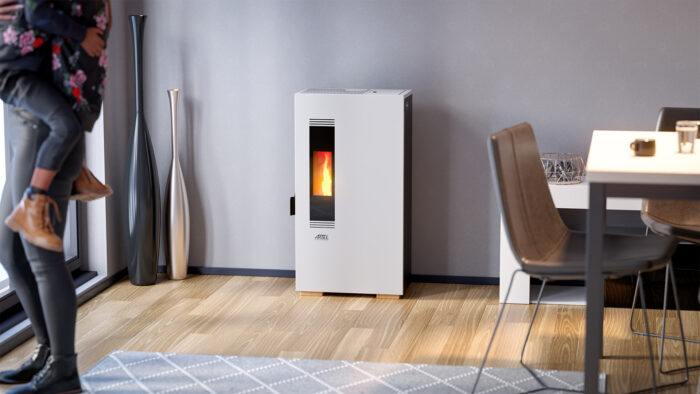
Pellet stoves are one of the most environmentally friendly and cost-effective forms of heating available. Some of the best pellet stoves are more than 95% efficient, which means you can add a great deal of warmth to your home with very little waste.
In order to maximise both both efficiency and financial savings — and ensure your pellet stove lasts as long as possible so you can continue to enjoy them — you will need to make sure you’re burning the right fuel for a pellet stove. So, what can you burn on a pellet stove?
You should always and only burn EnPlus A1 certified pellets on your pellet stove. ENPlus is an independent international certification scheme for wood pellets. Pellets are classified into different standards, with A1 and A2 being the two main standards.
EnPlus A2 certified pellets are intended for larger industrial pellet stove uses and typically produce more ash.
EnPlus A1 certified pellets are intended for home use. They produce less ash and offer the cleanest, most economical burn. For those reasons, it’s important to make sure that it’s A1 pellets that you’re buying.
Read on why that is, how to recognise certified pellets and why you shouldn’t burn anything else.
To make sure the wood pellets you’re buying are EnPlus A1 certified you need to check the packaging. In the case of pellets that are EnPlus A1 certified, you’ll find a seal on the bag that confirms this.

The seal will show:
Once a pellet stove is lit there are real flames that will burn anything. But a pellet stove is far more sophisticated than an open fire. It’s an automated, highly efficient piece of technology that is designed to burn pellets and pellets alone.
They are engineered to have pellets fed from the hopper at a rate that is calibrated to the burn rate of pellets. Pellet stoves need the density and consistency of EnPlus A1 certified pellets to operate correctly. Burning logs on a pellet stove — or any fuel other than pellets for that matter — will reduce the performance and probably damage the appliance.
Wood pellets are made from offcuts of wood, usually discarded in woodworking industries. This means they are being salvaged from landfill to begin with. In addition to that, the amount of carbon that is released when they are burnt is only equal to what was absorbed by the wood when it was a tree. As such, pellets are a sustainable and carbon neutral fuel.
Make sure you’re always burning what you should be on your pellet stove by:
Still looking for a pellet stove? You might find what you’re looking for in this collection of Artel Pellet Stoves.
{"one"=>"Select 2 or 3 items to compare", "other"=>"{{ count }} of 3 items selected"}